
Your Complete Guide to Building a Home Golf Simulator

The Masters starts on 9th April… and for many golf lovers, that’s the moment inspiration strikes.
A place to practice year-round. To refine your swing. To enjoy golf on your own terms, without weather, travel, or tee time restrictions.
That’s exactly why we created our Golf Simulator Guide — a practical, step-by-step resource to help you understand what’s involved in designing and building your own home golf simulator.
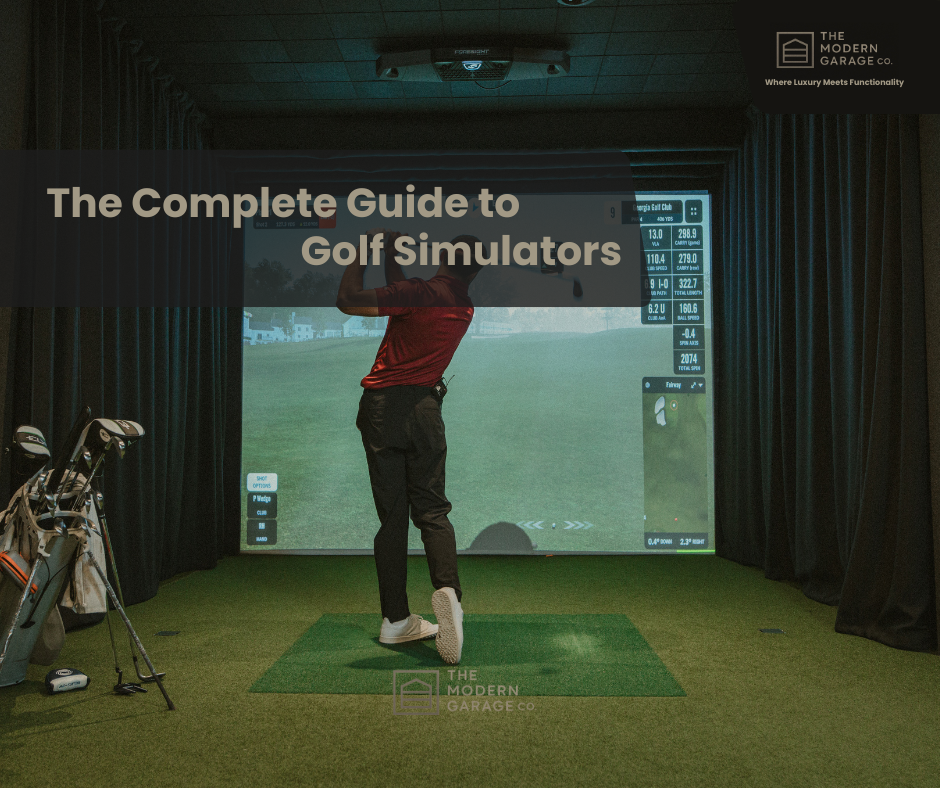
From Inspiration to a Real, Usable Space
A home golf simulator is no longer just a luxury concept, it’s a realistic, achievable addition to your home when planned correctly. But success comes down to one thing: getting the space right first.
Our Golf Simulator Guide helps you understand how to take an unused or underused area — often a garage — and turn it into a fully functional, high-performance golf environment.
But before any equipment is purchased, it’s essential to understand:
What space you actually need
How the layout will work in practice
What technical requirements must be considered
This is where most successful projects begin.
Space Planning & Room Requirements
One of the most important parts of any golf simulator build is ensuring your space is suitable.
The guide explores key planning considerations, including:
Minimum room dimensions (height, width, depth)
Safe swing clearance
Screen and enclosure positioning
Optimising garage or spare room layouts
Making the most of multi-use spaces
Getting this right early avoids costly changes later and ensures a safe, enjoyable experience once installed.
Understanding the Core System Components
A golf simulator is made up of several integrated systems that need to work together seamlessly.
Our guide breaks this down clearly, including:
Launch monitors and tracking systems
Impact screens and enclosures
Projectors and display setup
Hitting mats and flooring options
Software and gaming platforms
Each element plays a role in creating a realistic, responsive playing experience.
Technical Setup Made Simple
Behind every great simulator is a well-planned technical setup.
The guide explains the key infrastructure requirements, including:
Power supply considerations
Cabling and connectivity (HDMI, data, network)
Lighting design for accurate ball tracking
Equipment positioning and calibration
Ensuring system reliability and performance
This helps you avoid the common pitfalls that can affect accuracy and usability.
Designing a Space That Works for You
A golf simulator room should do more than just function, it should fit your lifestyle.
That’s why we also explore how these spaces can be designed for multiple uses, such as:
Home entertainment and cinema setups
Fitness and training spaces
Family leisure and gaming areas
When designed properly, your simulator becomes part of your home — not just an add-on.
Avoiding Common Mistakes
Many projects run into issues because of poor early planning.
The guide helps you avoid:
Choosing equipment before understanding space limitations
Underestimating clearance and safety requirements
Poor lighting setups affecting performance
Overcomplicating the system unnecessarily
Good planning at the start leads to a far better end result.
Why This Guide Matters
Whether you’re just starting to explore the idea or already planning a build, this guide is designed to help you make informed decisions at every stage.
It gives you clarity on:
What’s possible in your space
What equipment you actually need
How to approach the project in the right order
How to avoid unnecessary cost and complexity
If you’ve ever thought, “I’d love my own practice space at home” — this is your starting point.


Comments