
Infrared Saunas: Benefits, Considerations and Ideas for Your Home

An infrared sauna can be a valuable addition to a home wellness space, providing somewhere to unwind after a workout or simply take time out from a busy day. It can form part of a dedicated wellness room or sit alongside a home gym, creating a space designed around your fitness, relaxation and wellbeing.
As more homeowners explore ways to bring these facilities into their own homes, infrared saunas are worth considering. But how do they work, what are their potential benefits, and what should you think about before including one in a garage transformation?
At The Modern Garage Company, we take a joined-up approach to design, considering how the sauna will work with the wider space, from layout and flooring to lighting, ventilation and any additional gym or wellness facilities. The aim is to create a cohesive, practical space that feels like a natural extension of your home.

But what exactly is an infrared sauna? How does it differ from a traditional sauna, what are its potential benefits, and what should you consider before installing one at home?
At The Modern Garage Company, we believe the best wellness spaces start with thoughtful planning. In this guide, we explore how infrared saunas work, what the evidence says about their benefits, the practicalities of installation and how a sauna can become part of a beautifully designed garage transformation.
What is an infrared sauna?
An infrared sauna is a type of sauna that uses infrared heaters to produce radiant heat, warming the body directly rather than relying primarily on heating the surrounding air. This is the main difference between an infrared sauna and a traditional Finnish-style sauna, which typically uses a heated stove and stones to raise the temperature of the air inside the cabin.
Infrared saunas generally operate at lower air temperatures than traditional saunas, although the exact temperature depends on the model and its settings. Many people find this style of heat more comfortable than the higher temperatures associated with conventional saunas.
Infrared saunas are available in different sizes and configurations, from compact, single-person cabins to larger models designed for two or more people. The right option depends on your available space, how you intend to use it and the manufacturer's installation requirements.
What are the potential benefits of an infrared sauna?
An infrared sauna can be a welcome addition to a home wellness routine, offering a combination of warmth, relaxation and time to focus on your wellbeing. Whether you enjoy using one after exercise, as part of an evening wind-down or simply to take a break from a busy day, it provides a dedicated space to slow down and recharge.
Infrared saunas have attracted growing interest for their potential benefits, including relaxation, soothing tired muscles and supporting circulation. Research is ongoing, but there are several reasons why homeowners are choosing to incorporate them into their home wellness spaces.
1. Relaxation and time to unwind
One of the main attractions of an infrared sauna is the opportunity to step away from everyday distractions and enjoy some uninterrupted time for yourself. The gentle, enveloping warmth creates a calming environment that many people find relaxing, making a sauna session a welcome way to round off a busy day or take a break from the demands of work and family life.
Having a sauna at home makes it easier to build this time into your regular routine, without the need to travel to a spa or leisure facility. It can become a simple but enjoyable part of how you look after your overall wellbeing.
2. Warmth and post-exercise recovery
For those who enjoy regular exercise, an infrared sauna can complement a home fitness routine. The warmth may help tired muscles feel more relaxed after a workout, while taking time to rest provides a natural transition between exercise and the rest of your day.
Research is continuing into whether infrared sauna use can offer additional benefits for muscle recovery and physical performance. While the evidence is still developing, many people value the opportunity to combine exercise and relaxation in one convenient space.
For homeowners creating a dedicated home gym, incorporating a sauna can make the room feel more like a complete fitness and wellbeing environment, rather than simply somewhere to work out.
3. Circulation and cardiovascular wellbeing
When your body is exposed to sauna heat, your heart rate increases and your blood vessels widen, helping to increase blood flow to the skin. Researchers have also explored whether regular sauna bathing may offer longer-term cardiovascular benefits.
Some findings are encouraging, although much of the research into long-term outcomes relates to traditional Finnish saunas rather than infrared saunas specifically. More research is needed to establish the extent of any benefits associated with infrared sauna use.
For an accessible overview of the current evidence, see the Mayo Clinic's guide to infrared sauna health benefits.
4. Building a wellbeing routine around your lifestyle
One of the practical advantages of having an infrared sauna at home is the freedom to use it when it suits you. You might enjoy a session as part of your evening routine, after a workout or during a quiet moment at the weekend.
For some, it becomes part of a wider approach to wellbeing that includes regular exercise, relaxation and making more time for themselves. For others, the appeal is simply having a comfortable, private space to switch off.
A professionally designed home wellness space can bring these activities together, whether that means combining a sauna with a gym, creating a dedicated relaxation room or incorporating additional features such as a shower and specialist flooring.
What about detoxification and weight loss?
You may come across claims that infrared saunas help detoxify the body or lead to significant weight loss. It is worth distinguishing these claims from the more immediate benefits of warmth and relaxation.
Sweating is the body's natural way of regulating temperature, but there is no strong evidence that sauna use removes toxins beyond the body's normal processes or produces meaningful, lasting fat loss. Any immediate drop in weight after a session is primarily due to fluid loss.
An infrared sauna is best viewed as a complement to a healthy lifestyle, rather than a substitute for exercise, balanced nutrition or medical care.

Infrared sauna vs traditional sauna: what is the difference?
Both infrared and traditional saunas offer a heat-based experience, but they work in different ways. Understanding the difference can help you decide which option best suits your preferences and the space you are planning.
Feature | Infrared sauna | Traditional sauna |
How it heats | Infrared heaters warm the body through radiant heat | A heated stove and stones primarily heat the surrounding air |
Typical temperature | Generally lower air temperatures | Generally higher air temperatures |
Experience | Radiant warmth in a comparatively cooler environment | Hotter air, with humidity that can be increased by adding water to suitable sauna stones |
Available designs | Compact and larger cabin options | Traditional cabin designs in a range of sizes |
Main considerations | Heater specifications, electrical supply, clearances and ventilation | Stove and heater requirements, ventilation, heat protection and clearances |
The exact experience varies by model, so it is worth comparing specifications and trying each type if possible before making a decision. If you prefer a lower-temperature environment, an infrared sauna may appeal to you. If you enjoy the hotter, more traditional sauna experience, a conventional model may be a better fit.
The choice ultimately comes down to personal preference, the space available and the installation requirements of the particular model.
Can you install an infrared sauna in a garage?
Yes. An infrared sauna can be incorporated into a garage, provided the space is suitable and the installation meets the manufacturer's requirements and relevant safety standards. For homeowners looking to create a private wellness space, the garage can offer an opportunity to introduce facilities that may be difficult to accommodate elsewhere in the house.
An existing double garage, for example, may have sufficient room to combine a sauna with a home gym, stretching area, shower facilities and dedicated storage. Even a smaller space may offer possibilities, depending on its dimensions, access and existing use. Take a look at our case study here.
The important thing is to look at the garage as a whole before deciding where the sauna should go. At The Modern Garage Company, we approach this as part of the wider design. We consider how the sauna will work alongside the other elements, so the finished environment feels cohesive, practical and in keeping with the home.

What should you consider before installing a home sauna?
A sauna is a specialist piece of equipment, so there is more to consider than simply finding a suitable corner of the garage.
Available space and layout
Start with the sauna's external dimensions and the manufacturer's specified clearances. Allow enough room for access, the door to open properly and comfortable movement around the cabin.
If you are planning a home gym as well, consider how much space the equipment requires, including the clearance needed to use it safely. A layout that looks spacious on a plan must also work when the room is in use.
Electrical supply
Infrared saunas require an appropriate electrical supply. The requirements vary by model, including its power rating and whether it needs a dedicated circuit. These details should be checked before installation. A qualified electrician should assess the supply and complete any necessary electrical work in accordance with the applicable regulations.
Ventilation and moisture management
Although infrared saunas generally heat the air less than traditional saunas, ventilation and the surrounding environment still matter. Consider the manufacturer's ventilation requirements, the garage's existing airflow and how moisture will be managed, particularly if the design includes a shower or other wet area.
A shower room may also require appropriate waterproofing, drainage and mechanical or natural ventilation, depending on its design.
Flooring and wall finishes
The flooring and finishes need to suit the way the space will be used. A gym area may benefit from specialist flooring designed for exercise equipment and repeated impact, while a shower room needs a suitable water-resistant finish. The area around the sauna should follow the manufacturer's requirements for floor protection, clearances and installation.
Wall finishes, acoustic panels and lighting can help create a more considered atmosphere, but they must be suitable for their location and installed with appropriate clearances from heat sources.
Temperature and the existing garage
Garages can experience greater temperature fluctuations than the main house. Before choosing a sauna, consider insulation, ventilation, the condition of the building and the operating environment specified by the manufacturer.
It is also worth checking access through the garage door or internal doorway, particularly if the sauna is delivered in large panels or assembled on site.
Safety and ongoing use
Always follow the manufacturer's instructions for installation, operation and maintenance. Sauna use can cause sweating and fluid loss. Keep hydrated, avoid alcohol before or during use, start with short sessions and leave if you feel unwell, dizzy or light-headed. Seek medical advice before using a sauna if you have a health condition, are pregnant or have concerns about whether heat exposure is suitable for you.
The NHS guidance on dehydration explains the symptoms to watch for, including thirst, dizziness and tiredness.

How to incorporate an infrared sauna into a garage wellness design
The most successful garage wellness spaces are designed around how the homeowner wants to use them, rather than being a collection of individual products fitted into the available space.
A sauna can be the starting point for a dedicated relaxation area, or one part of a more comprehensive environment combining fitness, recovery and everyday wellbeing.
A home gym with an integrated sauna
For homeowners who exercise regularly, a gym and sauna combination brings training and relaxation into one convenient location. The layout might include strength equipment, cardio machines, mirrors and specialist gym flooring, with the sauna positioned in a separate, carefully planned area. Storage can be incorporated for weights, accessories, towels and other equipment, helping keep the space organised.

A dedicated wellness retreat
Not every wellness space needs to centre on exercise. You might prefer a quieter environment with a sauna, comfortable seating, considered lighting and finishes that create a calm atmosphere.
Depending on the available space, a shower or other recovery features could also be included. The aim is to create somewhere that feels distinct from the working parts of the home while remaining easy to access.
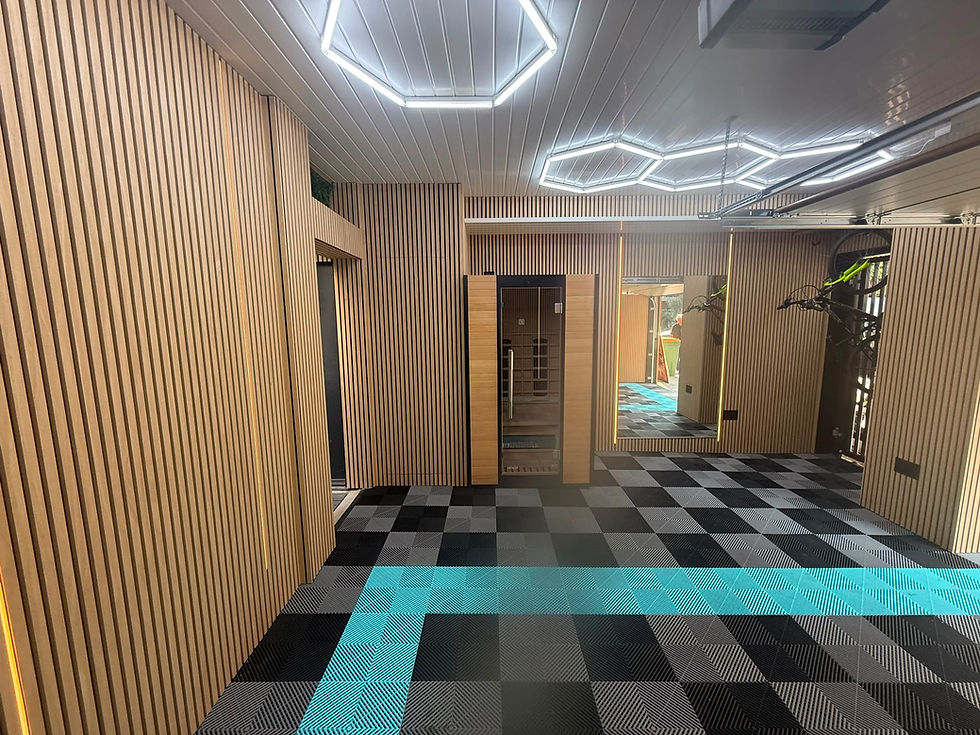
A combined fitness, shower and recovery space
A larger garage can potentially accommodate several zones, including a gym, sauna, shower room and space to stretch or unwind. This requires careful planning.
The equipment, wet areas, circulation routes, electrical requirements and storage all need to work together. Getting the layout right from the outset can make the finished space far more useful than adding each feature independently.
Real-life inspiration: incorporating a sauna into your garage design
At The Modern Garage Company, we believe a garage can offer far more than parking and storage. With thoughtful planning, it can become a dedicated space for fitness, relaxation and everyday wellbeing.
Our projects in Berkshire and Stratford demonstrate two different ways to approach a garage wellness transformation.
A home gym and wellness space in Berkshire
Our Berkshire home gym transformation shows how an existing double garage can be designed around fitness, recovery and relaxation. The space incorporates dedicated gym zones, specialist flooring, integrated lighting, mirrors, acoustic wall panels and bespoke storage. A shower room and cold bucket waterfall add further wellness facilities, while the wider design considers how a sauna can fit into the overall environment.
It is an excellent example of why considering the whole space from the outset matters. Each element needs to work alongside the others to create a practical, cohesive environment.

A wellness transformation in Stratford
Our Stratford wellbeing project demonstrates how a sauna can be incorporated into a professionally designed garage transformation, with our team carrying out the sauna installation as part of the project.
It illustrates the possibilities of reimagining an existing garage as a dedicated wellness environment, with the layout, finishes and facilities considered together rather than treating the sauna as an isolated addition.
Both projects reflect our approach: understanding how homeowners want to use their space, then bringing the design and installation together to create a garage that supports their lifestyle.

Why choose The Modern Garage Company for your sauna and wellness space?
Installing a sauna is only one part of creating a successful garage wellness environment. The layout, flooring, lighting, wall finishes, storage and other facilities all influence how the space looks and works.
Our Full-Service Design & Installation approach brings these elements together under one team, giving you a single point of contact from the initial design through to installation.
Depending on your brief and the space available, we can incorporate:
Infrared sauna installation
Home gym layouts and equipment assembly
Specialist gym flooring
Integrated lighting and electrical coordination
Mirrors and acoustic wall finishes
Bespoke cabinetry and equipment storage
Shower and other wellness areas, where appropriate
Finishes selected to complement your home
Every project is different. We begin by understanding how you want to use the space, then consider the practical requirements and design possibilities before developing a solution around you.
We work with homeowners across the UK, including premium homes in Berkshire, Buckinghamshire, Surrey and Cheshire, to transform existing garages into spaces that work harder for everyday life.
You can explore more ideas on our Garage Wellness & Wellbeing page.

Frequently asked questions about infrared saunas
What is an infrared sauna used for?
An infrared sauna uses radiant heat to warm the body and is commonly used for relaxation and personal wellbeing. Some people also enjoy using one after exercise. Research into possible wider health benefits is ongoing, and it should not be treated as a medical therapy.
Are infrared saunas better than traditional saunas?
Not necessarily. Infrared saunas generally operate at lower air temperatures and use radiant heat, while traditional saunas heat the surrounding air to higher temperatures. The best option depends on your preferred experience, the model and the space available.
Can I put an infrared sauna in my garage?
Yes, provided the garage is suitable and the installation meets the manufacturer's requirements. Electrical supply, ventilation, clearances, access and the surrounding building conditions should all be considered before installation.
Can a sauna be installed as part of a garage home gym?
Yes. A sauna can be integrated into a wider garage design alongside gym equipment, specialist flooring, mirrors, lighting and storage. Larger spaces may also accommodate a shower or separate relaxation area. Click here to find out more.
How much space do I need for an infrared sauna?
There is no single space requirement. It depends on the model, its external dimensions, specified clearances, access requirements and the other uses planned for the room. Check the manufacturer's installation instructions before finalising the layout.
Do infrared saunas help with detoxification or weight loss?
There is not good evidence that sweating in an infrared sauna removes unspecified toxins or produces meaningful fat loss. Temporary weight changes after a session are primarily due to fluid loss. A sauna should not replace exercise, a balanced diet or medical treatment.
Are infrared saunas safe?
Many people use saunas for relaxation, but heat exposure is not suitable for everyone. Follow the manufacturer's instructions, stay hydrated, avoid alcohol and stop if you feel unwell. If you have a medical condition, are pregnant or are unsure whether sauna use is appropriate for you, seek advice from a healthcare professional.
Can The Modern Garage Company design and install a sauna?
Yes. We can incorporate a sauna into a complete garage design and installation project, planning it alongside the other features of your wellness space. The precise solution will depend on the property, the chosen sauna and the installation requirements.
Create your own garage wellness space
An infrared sauna can be a valuable addition to a home wellness space, but the best results come from looking beyond the sauna itself. By considering the layout, equipment, finishes, lighting and practical requirements together, you can create a space that feels considered, works for your lifestyle and makes better use of your existing garage.
At The Modern Garage Company, we bring the design and installation together, helping you turn an underused garage into a place for fitness, recovery and relaxation.
Thinking about incorporating a sauna into your garage? Explore our Garage Wellness & Wellbeing service or get in touch with our team to discuss your ideas.


Comments